Setting up a Stripe account and a landing page is the easy part. Here is the complete picture most guides skip, including the traffic strategy that turns a product listing into a real income stream.
Selling digital products online is genuinely one of the best income decisions a beginner can make.
Zero inventory. Zero shipping. Zero restocking. A product you build once can sell to one person or ten thousand people with identical effort on your end. The economics are almost unfairly favorable compared to any physical product business.
And yet thousands of people build digital products every week, list them on a platform, and earn nothing.
Not because their product is bad. Not because the market does not exist. But because the advice they followed stopped at the technical setup and never addressed the part that actually determines whether money changes hands:
Getting consistent, qualified buyers to the product in the first place.
This article covers the complete picture. The product. The platform. The pricing. And critically, the traffic system that separates digital product sellers who earn from those who simply have a listing sitting online.
Before we get into the full roadmap, my mentor Richard Yu has put together a free masterclass that addresses exactly that missing piece. He shows how people are using AI and Instagram to drive consistent traffic to digital products and build real passive income, starting from zero.
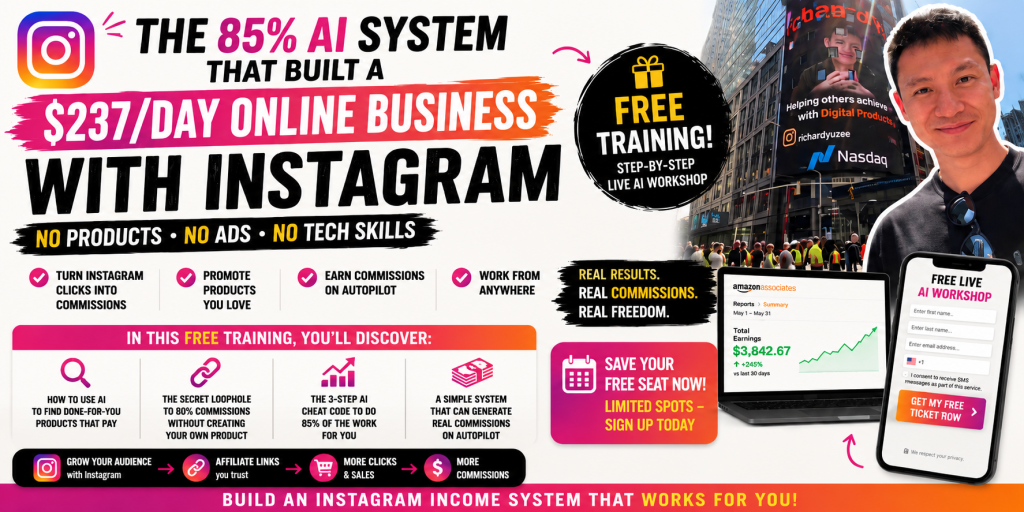
Save your spot now, then work through the complete roadmap below.
Stage One: Build Something Worth Buying
The fastest path to your first digital product sale begins not with a design tool but with a search bar.
Go to Etsy before you build anything. Search the general topic area of your intended product. Filter by bestsellers. Look at what is selling with hundreds of reviews. Read those reviews carefully, including the complaints in the lower-rated ones.
The unfulfilled expectations in those reviews tell you exactly what the market wants that it is not currently getting.
Build the version that delivers what the competition failed to.
Specificity is the variable that separates products that sell consistently from products that sit unnoticed in a crowded marketplace. A generic social media template pack competes with thousands of listings. A social media template pack specifically designed for holistic health coaches in their first year of business competes with almost no one.
The more specifically your product speaks to a defined buyer, the less competition you face and the higher the price you can charge.
AI accelerates production significantly. Use it to outline the product structure, draft written content, generate product descriptions, and write the promotional copy that drives clicks on your listing. Canva handles the visual design.
What used to take weeks of focused creative work now takes a concentrated weekend.
Build it lean. Get it live. Collect real buyer feedback before you invest more time refining it.
Stage Two: Choose the Right Platform

The platform decision comes down to one honest question: do you have an existing audience who will buy from you, or are you starting with zero?
If you are starting from zero, begin on a marketplace. Etsy has over 90 million active buyers searching the platform daily. Your product gains immediate exposure to motivated buyers without you driving all the traffic yourself.
The trade-off is listing fees and algorithm competition, but the path to a first sale is dramatically faster than building your own store and waiting for traffic to arrive.
Gumroad is the fastest platform to get a product live and collecting payments. No listing fees. No marketplace competition. Clean delivery. The meaningful advantage is that every buyer’s email address is collected automatically, which means you are building an owned customer list from your very first sale.
The trade-off is that Gumroad brings zero organic traffic. Every visitor must come from your own marketing efforts.
Stan Store integrates directly with Instagram and is purpose-built for creators who are growing an audience on social media. If Instagram is where you are building your content presence, Stan Store keeps the buying experience inside the social media ecosystem your audience already lives in.
Your own website is the long-term destination. Full control. Full branding. No platform fees. No risk of account suspension. No dependence on marketplace algorithms.
But this is the destination, not the starting point. Build traffic first. Migrate to your own platform once that traffic is consistent.
Stage Three: Price With Conviction

The most common pricing mistake in digital products is not greed. It is timidity.
Beginners underprice because uncertainty about whether anyone will buy translates into apologetic pricing.
That apologetic pricing communicates low confidence in the product’s value, which creates the very hesitation it was meant to prevent.
The math of pricing deserves a clear look. To earn $1,000 at $5 per sale requires 200 transactions. To earn the same $1,000 at $47 per sale requires 22 transactions. To earn it at $97 per sale requires 11.
Every tier down in price requires dramatically more traffic to generate the same revenue, which makes the business harder, not easier, for a beginner with a growing audience.
Research your niche, identify where comparable products are priced, and position in the mid to upper range of that window. Your first product does not need to be perfect.
It needs to be genuinely useful and priced in a way that signals you believe in what you built.
Stage Four: Build the Traffic System

This is the section the AWeber article skimmed over and the section that determines whether everything above earns money or sits waiting.
A landing page connected to Stripe is a payment mechanism. It is not a business. A business requires consistent inbound traffic from people who are already interested in what you sell.
The digital product sellers generating real recurring income are operating a content system that continuously introduces new buyers to their products.
They are not relying solely on Etsy search rankings. They are not waiting for a viral moment. They are building a predictable pipeline of traffic from sources they influence and, over time, control.
Instagram is the most effective free traffic platform for digital product sellers right now. It rewards consistent content over paid promotion. It reaches buyers who are in active discovery mode.
And it allows relationship-building at scale before a single sale is made, which is the foundation of any product business that generates repeat buyers rather than one-time transactions.
The challenge has always been the content creation volume required to build Instagram traffic consistently. That challenge no longer exists at the level it once did.
AI writes your captions, generates your content angles, drafts your story scripts, and helps you build an entire month of promotional content in a single focused afternoon.
The system runs. The traffic flows. The sales compound.
That complete system is what Richard walks through in his free masterclass. From the content strategy to the AI workflow to the affiliate and product monetization layer that maximizes what that traffic is worth.
Knowing how to sell digital products online is the foundation. Building the system that sends buyers consistently is what makes it a real business.
👉 Access Richard’s free masterclass HERE
Register now, work through it at your own pace, and walk away with a complete action plan that covers both sides of the equation: what to sell and exactly how to get the right people buying it.
This post contains affiliate links. I may earn a commission if you register through my link, at no extra cost to you.
Leave a Reply