Etsy has 90 million active buyers searching for exactly what you could create. The only question is which product idea gets you to your first sale the fastest, and which ones are worth building a long-term passive income business on.
Opening an Etsy shop to sell digital products is one of the most genuinely beginner-friendly business decisions available right now.
No inventory. No shipping. No restocking.
A product you build once continues selling to buyers around the world at 3am on a Tuesday without your involvement in any single transaction.
The file transfers automatically. The payment lands in your account. You are not there for any of it.
That is the promise of digital products on Etsy. And unlike most online income promises, this one is real.
What separates the Etsy shops generating $2,000 per month from the ones earning $20 per month is not talent or creativity.
It is product selection.
Choosing the right digital product idea before building anything is the decision that determines whether your first month feels like momentum or discouragement.
Before we get into the specific ideas worth building, my mentor Richard Yu has put together a free masterclass that shows exactly how people are using AI and Instagram to drive consistent external traffic to their digital productS and build real passive income that compounds over time.
Etsy’s internal search traffic is a starting point.
An Instagram content system that sends motivated buyers to your Digital Products every single day is what scales it.
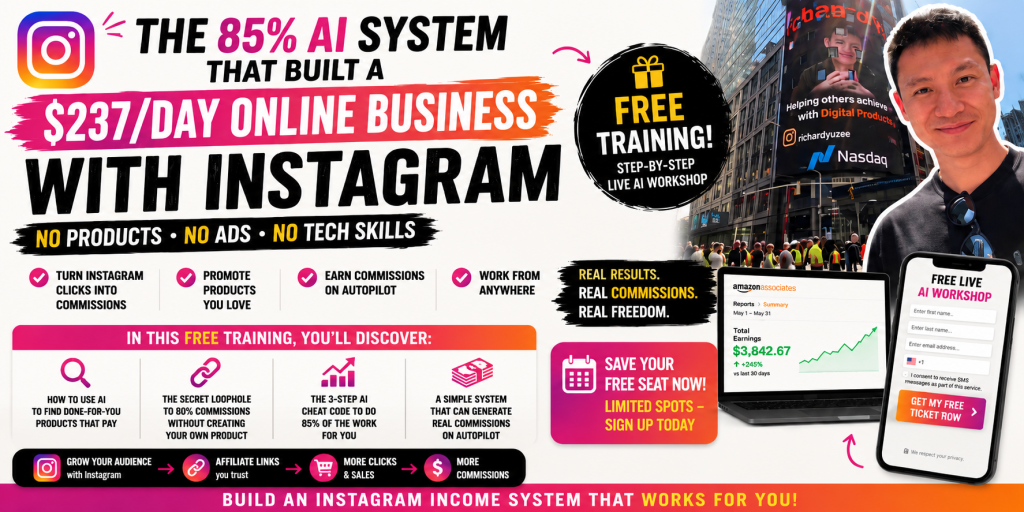
Save your spot now, then work through the complete product idea guide below.
The Rule That Should Guide Every Product Decision
Before any specific idea, the validation principle that saves beginners months of wasted effort.
Search your product category on Etsy before building anything.
Filter by bestsellers. If multiple shops have hundreds of sales and detailed reviews in that category, you have confirmed real buyer demand. People are already spending money here.
Your job is not to reinvent the category. It is to serve that existing demand more specifically than the competition currently does. The seller with 400 reviews for a generic budget planner cannot compete with a seller offering a budget planner built specifically for teachers managing a classroom supply budget.
Niche specificity is the competitive advantage available to every beginner regardless of how new their shop is.
Digital Product Ideas to Sell on Etsy That Beginners Can Build This Weekend

Budget and Finance Templates
Personal finance spreadsheets, debt payoff trackers, savings challenge worksheets, and monthly budget planners have consistent year-round demand because financial stress does not follow a seasonal pattern.
The buyer for these products is motivated, makes purchasing decisions quickly, and actively searches for tools that make their specific financial situation feel manageable.
The specificity approach that works: a budget template for teachers managing classroom expenses alongside personal finances, a debt tracker specifically for people using the avalanche payoff method, a savings tracker for couples saving for their first home.
Each of these competes in a much smaller pool than a generic budget template and serves a buyer who feels immediately understood by the product.
Google Sheets is free to use. AI structures the logic, writes the product titles, descriptions, and Etsy tags. Canva designs any cover or promotional images. Production time for a focused beginner: one weekend.
Canva Templates for Specific Business Types
Social media templates, media kit templates, business card designs, presentation decks, and brand kits sell consistently to small business owners and solopreneurs who need professional-looking visual assets but lack either the design skills or the time to create them from scratch.
The product earns because it solves a time problem for a buyer who has an immediate, concrete use for it.
Your template saves them four hours they do not have. They pay $27 to $47 for that saved time without hesitation.
Niche the product down aggressively.
- Instagram templates for plant-based food bloggers.
- Brand kits for handmade jewelry sellers.
- Media kit templates for micro-influencers in the wellness space.
- etc
Each of these speaks to a buyer who feels the product was built specifically for them, which is the emotional trigger that converts browsers into buyers faster than anything else on Etsy.
Printable Planners and Productivity Tools

Daily planners, weekly habit trackers, goal-setting workbooks, meal prep organizers, and daily schedule templates sell to buyers who prefer physical or analog planning systems over digital apps.
This is a large, motivated, and consistently active buyer category on Etsy.
The emotional angle that converts: planners that speak to a specific life situation rather than a generic productivity goal.
- A daily planner for people recovering from burnout who need gentler structure.
- A weekly planner for freelancers managing multiple client projects and personal deadlines simultaneously.
- A meal prep planner for families managing multiple food allergies without feeling overwhelmed.
AI writes the prompts, the page structures, and the instructional copy. Canva handles the layout and design. Production time: a focused weekend.
Party Invitations and Event Printables
People planning events need printable invitations, place cards, thank you cards, menu templates, and party signage, and they need them downloadable immediately rather than ordered and shipped.
A buyer planning a baby shower next Saturday does not have time to wait for physical stationery.
Your Etsy listing is the solution they are actively searching for right now.
Important note: avoid any trademarked characters, Disney, Pixar, Nickelodeon, and similar branded content.
The risk of shop suspension is real and the ethical issues are significant.
Build around original aesthetic themes instead: minimalist, floral, woodland, boho, retro, and seasonal. These serve every audience without the copyright risk.
Coloring Pages and Activity Sheets

Adult coloring pages as a stress-relief activity, children’s educational activity sheets, and themed coloring books for specific audiences, religious themes, motivational quotes, nature and botanical, sell consistently across age groups and purposes.
AI generates the theme concepts and product descriptions.
Procreate or Canva creates the artwork.
The product is uploaded once and earns from every download indefinitely.
Patterns and Instructional Guides
Crochet patterns, knitting patterns, sewing patterns, and craft tutorials sell to buyers who are actively creating something and need instructions.
The buyer for this product type is highly motivated and purchases quickly because they need the pattern to continue their project.
If you have any crafting skill that produces consistent, replicable results, packaging that knowledge as a pattern or instructional guide is a natural digital product with built-in buyer demand.
Make patterns available for commercial use to open your market to both individual crafters and small business owners simultaneously.
Digital Art Prints

Quote prints, nursery art, motivational posters, and botanical illustrations sell as downloadable files that buyers print at home or through a local print shop.
The buyer receives an instant download of a high-resolution file they can print in any size they need.
The product is created once. The file sells indefinitely.
Canva mockups showing the print displayed in a realistic home setting are essential for conversion because buyers need to visualize the product in their space before purchasing.
The Variable That Determines How Much Your Etsy Shop Actually Earns
Every product above has real buyer demand on Etsy.
Every one of them has generated consistent passive income for sellers who built their shops with patience and specificity.
The variable that separates shops earning $200 per month from shops earning $2,000 per month is not the product quality.
It is how consistently new buyers find the shop from sources beyond Etsy’s internal search algorithm.
The sellers generating the most significant Etsy digital product income are not relying on Etsy alone.
They have built an external content system, specifically on Instagram and Pinterest, that continuously introduces motivated buyers to their products from outside the marketplace.
That external traffic compounds the Etsy search traffic and creates a revenue stream significantly larger than either source could produce independently.
AI makes building that Instagram content system manageable for a single person running an Etsy shop.
Captions, hook ideas, promotional sequences, and content calendars are generated in a single afternoon session.
The traffic flows consistently. The product sales compound.
Richard’s free masterclass walks through the complete AI-powered Instagram system built specifically for people selling digital products who want to drive consistent external traffic without paid advertising or social media expertise.
Your Etsy product ideas are only as valuable as the audience that discovers them.
Richard shows you exactly how to build that audience.
👉 Access Richard’s free masterclass HERE
Register now, work through it at your own pace, and walk away with both the product ideas worth building and the traffic system that turns your Etsy shop into a genuinely passive income asset.
This post contains affiliate links. I may earn a commission if you register through my link, at no extra cost to you.