The platform you choose determines how fast you make your first sale, how much you keep from each one, and how big the business can grow. Here is exactly how to decide.
Here is a mistake that costs digital product beginners months of wasted effort.
They spend weeks building a product, pick a platform at random, list it, and wonder why nothing sells.
Then they assume digital products do not work for them when the real problem was never the product.
It was that the platform they chose was mismatched with where they actually are in their business journey.
Where you sell your digital products matters enormously. Different platforms serve completely different stages of business development.
A platform that is perfect for a beginner with no audience is a ceiling for someone ready to scale.
A platform built for established brands is a graveyard for a first-time seller with zero traffic of their own.
This article gives you the honest, stage-by-stage breakdown of where to sell digital products so you can make the right choice the first time and stop starting over.
Before we get into the full guide, my mentor Richard Yu has put together a free masterclass that shows exactly how people are using AI and Instagram to drive consistent traffic to their digital products and build real passive income from scratch.
Because knowing where to sell is only half the equation. Getting buyers there is the other half, and that is where most beginners get stuck.
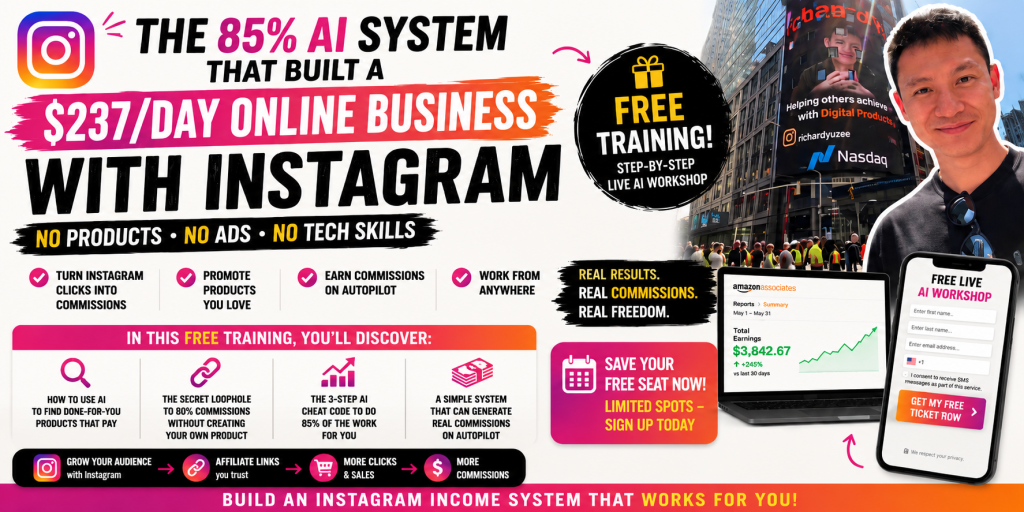
Save your spot now, then keep reading for the complete platform breakdown.
The One Question That Determines Everything
Before comparing platforms, answer one question honestly.
Do you have an existing audience that will buy from you, or are you starting from zero?
This single answer determines which platform to use first. If you have no existing audience, you need a platform that brings buyers to you.
If you have an audience, you need a platform that gives you maximum control, maximum margin, and the ability to own your customer data.
Most beginners are in the first camp. And most beginners choose platforms built for the second camp, then wonder why nothing sells.
Where to Sell Digital Products When You Are Starting From Zero

Etsy
Etsy is the single best starting point for most digital product beginners and it is not particularly close. Here is why.
Etsy has over 90 million active buyers browsing the platform specifically looking to purchase.
When you list a product on Etsy, you gain immediate access to that existing demand without needing to drive your own traffic.
For someone with no audience, no email list, and no established social media presence, this is invaluable.
The trade-off is fees and competition. Etsy charges listing fees and transaction fees on every sale. And popular product categories are competitive.
The solution is not to avoid Etsy but to niche down aggressively.
“Budget planner” competes with thousands of listings. “Budget planner for single moms rebuilding after divorce” competes with almost none.
Use Etsy to validate demand, generate your first sales, collect reviews, and understand what your buyers actually want. Then use that data to improve your products and expand your presence.
Gumroad
Gumroad is the most frictionless platform for getting a digital product live quickly. You can create an account, upload a product, set a price, and have a working product page in under 30 minutes.
There are no listing fees and the platform handles payment processing and digital delivery automatically.
The significant advantage of Gumroad over Etsy is that it collects buyer email addresses with every purchase.
From day one, you are building an owned audience of paying customers, which is the most valuable long-term asset in any digital product business.
The trade-off is that Gumroad has no built-in marketplace traffic. You are responsible for driving every visitor to your product page.
This makes it best used alongside a content strategy, specifically Instagram, Pinterest, or a blog, that consistently sends new buyers your way.
Payhip
Payhip is similar to Gumroad in functionality but has a more generous free tier and slightly lower transaction fees at entry level.
It supports digital products, memberships, and online courses all from a single platform.
A solid alternative worth considering alongside Gumroad for beginners who want simplicity without Etsy’s competitive marketplace environment.
Where to Sell Digital Products When You Have a Growing Audience
Stan Store
Stan Store is built specifically for Instagram and TikTok creators and integrates seamlessly with both platforms.
Your entire digital product storefront lives behind a single link in bio, making it frictionless for followers to browse and purchase without ever leaving their social media experience.
For creators building an audience on Instagram, Stan Store is genuinely one of the best options available right now.
It supports digital products, courses, bookings, and memberships, all in a clean, mobile-optimized interface designed around the way social media buyers actually shop.
Shopify
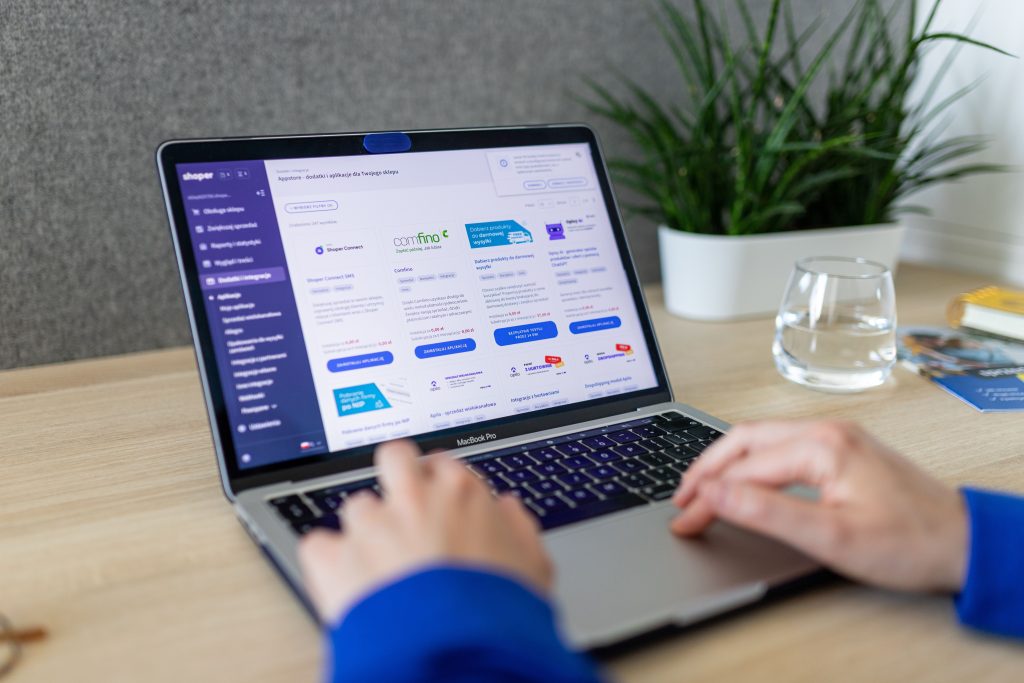
Shopify is the right choice when your digital product business has reached a level where brand ownership, full customization, and complete customer data control matter.
You pay a monthly subscription fee in exchange for a fully brandable storefront that you own entirely, no marketplace fees, no algorithm changes affecting your visibility, no platform removing your listings.
The trade-off is that Shopify generates zero organic traffic. Every visitor comes from your own marketing efforts.
This makes it a poor starting point for beginners with no audience, and an excellent scaling platform for creators who already have consistent traffic flowing from Instagram, Pinterest, or a blog.
Your Own Website
The long-term goal for any serious digital product business is selling through your own website with your own email list driving repeat purchases.
- No platform fees.
- No risk of account suspension.
- No dependence on someone else’s algorithm or marketplace policies.
This is worth building toward, but it is the destination, not the starting point. Get your first hundred sales on a marketplace. Build your audience through content.
Then migrate to your own platform once the traffic and trust are already established.
The Platform Decision Nobody Talks About: Traffic

Here is the honest reality that most platform comparison articles never address.
The best platform in the world earns nothing without consistent traffic.
Etsy brings some built-in traffic but not enough to build a real business on its own. Gumroad, Stan Store, and Shopify bring zero organic traffic whatsoever.
Your product and your platform are only as valuable as your ability to put them in front of people who want to buy.
This is where most digital product sellers stall. They have a good product. They have a reasonable platform.
They have no consistent stream of new buyers finding them.
The creators earning real recurring digital product income have solved the traffic problem.
Specifically, they have built a content system on Instagram or Pinterest that consistently drives new buyers to their products without requiring paid advertising or constant manual effort.
AI has made that content system dramatically more buildable for beginners.
It writes the captions, generates the content ideas, drafts the promotional sequences, and helps you produce weeks of content in a single focused session. The traffic flows. The product sells. The income compounds.
That is the complete picture. Product plus platform plus traffic system.
And the traffic system is what Richard walks you through in complete detail in his free masterclass.
Knowing where to sell your digital products is the first step. Building the system that sends consistent buyers there is what actually makes the business work.
👉 Access Richard’s free masterclass HERE
Register now, work through it at your own pace, and walk away with a clear understanding of not just where to sell your digital products but exactly how to drive the consistent traffic that turns a product listing into a genuine passive income stream.
This post contains affiliate links. I may earn a commission if you register through my link, at no extra cost to you.
Leave a Reply